产品五:绗缝绗绣 Product 5: Quilting and Embroidery
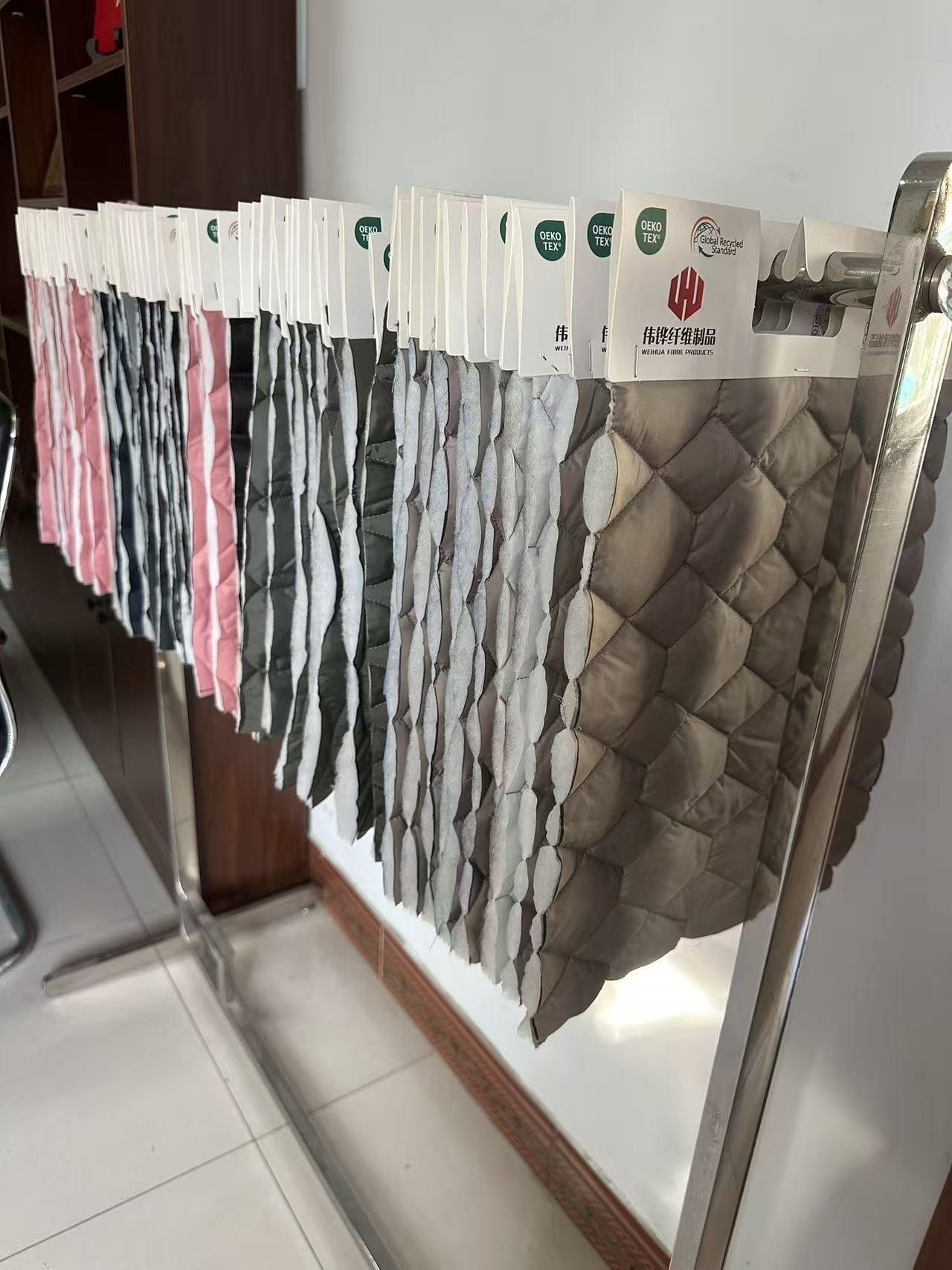
绗缝是一种布料加工工艺,通过使用长针将夹层纺织物与内部填充物(如脱脂棉、羽绒等)缝合固定,主要用于被褥、床垫等制品的成型,以防止填充物移动,确保厚度均匀。 Quilting is a textile processing technique that uses long needles to stitch together layered fabrics and internal fillings (such as defatted cotton or down), primarily used in the production of quilts, mattresses, and other bedding items to prevent the movement of fillings and ensure uniform thickness.
绗缝与绣花是两种不同的工艺。绗缝侧重于通过缝合固定填充物,形成图案或直线,强调实用性;绣花则通过针线在面料上绣制花纹,注重装饰性。两者可结合使用,但绗缝的核心在于结构固定,而绣花专注于艺术表现。 Quilting and embroidery are two distinct processes. Quilting focuses on stitching to secure fillings, forming patterns or lines, emphasizing functionality; embroidery involves stitching decorative patterns onto fabric, focusing on aesthetics. Although they can be combined, quilting's core lies in structural fixation, while embroidery centers on artistic expression.
应用领域 Applications
绗缝的应用领域已从传统床上用品扩展至多元化产品。主要包括家纺(如绗缝被、床品套件)、服装、箱包、鞋帽、沙发面料等,甚至延伸到工艺礼品和汽车垫等领域。这种扩展使绗缝制品兼具美观与功能性,满足多样化需求。 The application of quilting has expanded from traditional bedding to diverse products, including home textiles (e.g., quilts, bedding sets), clothing, bags, hats, sofa fabrics, and even crafts and automotive mats. This expansion allows quilting products to combine aesthetics with functionality, meeting diversified needs.